Outline
- Inside the AI Smartphone Revolution: What Makes the Next Generation Different
- From Smart to Intelligent: How Smartphones Reached This Turning Point
- What “AI Smartphones” Really Mean in 2026
- On-Device AI: The Biggest Shift No One Talks About
- AI-Powered Cameras: Beyond Megapixels
- Personalized User Experience: Phones That Learn You
- AI and Battery Life: Smarter Power, Longer Days
- Productivity and Creativity in Your Pocket
- AI Assistants That Finally Feel Useful
- Privacy, Security, and On-Device Intelligence
- How AI Smartphones Are Changing Apps and Software
- Gaming, AR, and Real-Time Intelligence
- What Tech Giants Are Competing On Now
- Are AI Smartphones Really Worth the Upgrade?
- The Future of Smartphones Beyond 2026
- Conclusion
- FAQs
Inside the AI Smartphone Revolution: What Makes the Next Generation Different
For more than a decade, smartphones evolved in predictable ways—bigger screens, better cameras, faster processors. Each year brought improvements, but rarely transformation. In 2026, that pattern has finally broken. We are living through a quiet but profound shift: smartphones are no longer just smart devices; they are becoming intelligent companions.
The AI smartphone revolution isn’t about flashy new designs or gimmicks. It’s about how phones think, adapt, and anticipate. Artificial intelligence is now deeply embedded at the core of modern smartphones, changing how we interact with them and how they interact with us. The difference isn’t always obvious at first glance, but once experienced, it’s hard to go back. This new generation doesn’t just respond—it understands.
From Smart to Intelligent: How Smartphones Reached This Turning Point
Early smartphones earned the “smart” label because they combined computing and connectivity. Over time, app ecosystems exploded, turning phones into multipurpose tools. But intelligence was limited. Phones followed instructions; they didn’t interpret intent.
Several forces pushed smartphones to this turning point. Hardware became powerful enough to run complex AI models. Neural processing units (NPUs) were introduced, designed specifically for machine learning tasks. At the same time, AI research advanced rapidly, especially in natural language understanding, computer vision, and personalization.
Equally important, users reached feature fatigue. Incremental upgrades no longer felt exciting. Manufacturers needed a new axis of innovation. AI provided it—not as a single feature, but as a foundation that touches everything from photography to battery management.
What “AI Smartphones” Really Mean in 2026
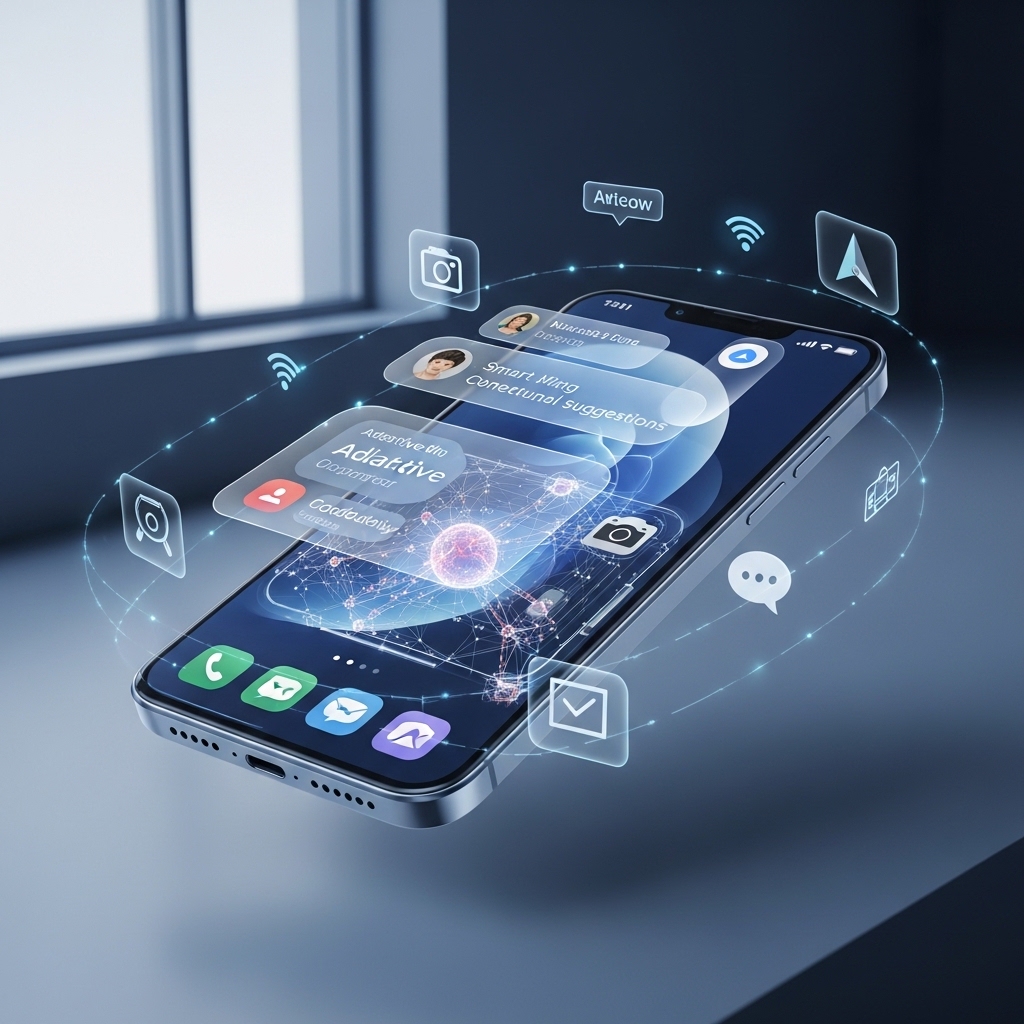
An AI smartphone isn’t just a phone with a chatbot installed. It’s a device built around continuous learning and context awareness. AI operates at the system level, influencing how apps behave, how resources are allocated, and how information is presented.
In practical terms, this means your phone understands patterns: when you wake up, how you commute, who you communicate with most, and what you typically do at certain times of day. Instead of waiting for commands, the phone proactively supports you—suggesting actions, surfacing information, and reducing friction.
This intelligence isn’t about replacing human choice. It’s about reducing cognitive load. The best AI smartphones don’t feel intrusive; they feel helpful, almost intuitive.
On-Device AI: The Biggest Shift No One Talks About
One of the most important changes in the AI smartphone revolution is where intelligence lives. In earlier generations, AI relied heavily on the cloud. Data had to be sent to servers, processed, and returned. This created latency, privacy concerns, and dependency on connectivity.
In 2026, much of that intelligence runs directly on the device. On-device AI allows phones to process voice, images, and behavior locally. This makes responses faster, more reliable, and more private.
On-device AI also enables continuous learning without constant data uploads. Your phone can adapt to you personally, not just statistically. This shift is subtle, but it’s foundational. It’s what makes next-generation smartphones feel truly personal rather than generically smart.
AI-Powered Cameras: Beyond Megapixels
Cameras have been a battleground for smartphone makers for years, but AI has completely changed the rules. The next generation of smartphones doesn’t just capture images—it interprets scenes in real time.
AI analyzes lighting, motion, faces, objects, and even intent. It knows when you’re photographing food versus documents versus a sunset. Instead of offering dozens of manual modes, the camera adapts automatically. Post-processing happens instantly, blending multiple frames, correcting imperfections, and enhancing details naturally.
Video benefits even more. Real-time stabilization, background separation, and cinematic effects are driven by AI models running on-device. The result isn’t just better quality—it’s consistency. Great photos and videos become the default, not the exception.
Personalized User Experience: Phones That Learn You
Perhaps the most noticeable difference in AI smartphones is personalization. The phone gradually becomes tailored to you in ways that feel organic rather than forced.
Your home screen changes based on context. Apps you need appear before you search for them. Notifications become smarter, filtering noise and prioritizing what actually matters. The phone learns when not to interrupt you.
This level of personalization goes beyond settings menus. It’s dynamic and adaptive. Over time, the phone feels less like a generic product and more like a reflection of your habits. That’s the real promise of AI—not automation, but alignment.
AI and Battery Life: Smarter Power, Longer Days
Battery life has always been a pain point, but AI is quietly improving it. Instead of treating power management as a static system, AI smartphones analyze usage patterns continuously.
The phone predicts which apps you’ll use and when, allocating resources accordingly. Background processes are intelligently paused. Display brightness, refresh rate, and connectivity adapt in real time.
The result isn’t just longer battery life—it’s more predictable battery life. Your phone lasts when you need it most. That reliability is one of the most underrated benefits of AI integration.
Productivity and Creativity in Your Pocket
AI smartphones are becoming powerful productivity tools. Writing assistance, summarization, translation, and transcription happen instantly, often offline. Meetings can be recorded, summarized, and action items extracted automatically.
Creativity also benefits. Photo editing, video creation, music composition, and design tools leverage AI to lower the barrier to entry. You don’t need professional skills to produce professional-looking results.
Importantly, AI doesn’t replace creativity—it accelerates it. It handles tedious steps so humans can focus on ideas. That’s why smartphones are increasingly central to creative workflows.
AI Assistants That Finally Feel Useful
For years, digital assistants promised more than they delivered. In 2026, that’s finally changing. AI assistants are more conversational, contextual, and proactive.
They understand follow-up questions. They remember preferences. They operate across apps instead of being confined to one ecosystem. Instead of acting like voice-controlled search engines, they behave more like personal aides.
Crucially, they don’t demand attention. They work quietly in the background, surfacing help when relevant. This shift from reactive to anticipatory assistance defines the new generation.
Privacy, Security, and On-Device Intelligence
With greater intelligence comes greater responsibility. AI smartphones handle sensitive data—habits, conversations, locations. Privacy isn’t optional; it’s essential.
On-device processing significantly reduces data exposure. Biometric security is enhanced by AI-driven pattern recognition. Fraud detection, spam filtering, and threat monitoring operate continuously without user intervention.
Transparency also matters. Users expect control over how data is used. The most trusted AI smartphones are those that make privacy a feature, not an afterthought.
How AI Smartphones Are Changing Apps and Software
Apps are evolving to take advantage of system-level intelligence. Instead of building isolated features, developers integrate with AI frameworks provided by the operating system.
This leads to smoother experiences. Apps feel more responsive and context-aware. Redundancy decreases as core AI capabilities are shared across the system.
Over time, the distinction between app and OS blurs. The phone becomes a unified intelligent environment rather than a collection of disconnected tools.
Gaming, AR, and Real-Time Intelligence
AI also transforms entertainment. Mobile games use AI to adapt difficulty, generate content, and respond to player behavior dynamically. Augmented reality becomes more convincing as AI understands environments in real time.
From navigation overlays to immersive gaming, AI-driven perception makes smartphones more interactive with the physical world. This is where smartphones start to feel less like screens and more like extensions of perception.
What Tech Giants Are Competing On Now
Specs still matter, but the competition has shifted. It’s no longer about raw power—it’s about intelligence. Companies compete on AI models, optimization, ecosystem integration, and privacy architecture.
The best AI smartphones aren’t defined by one killer feature. They’re defined by how everything works together. Intelligence becomes the differentiator, not hardware alone.
Are AI Smartphones Really Worth the Upgrade?
For many users, the difference feels subtle at first. But over time, it compounds. Fewer frustrations. Better results. Less effort.
AI smartphones aren’t about wow moments—they’re about everyday improvements. Whether that’s enough to justify an upgrade depends on how much you value seamlessness. For many, once experienced, there’s no going back.
The Future of Smartphones Beyond 2026
Looking ahead, smartphones will continue to fade into the background while becoming more capable. AI will deepen its understanding of context, emotion, and intent.
The ultimate goal isn’t smarter phones—it’s more empowered users. Technology that adapts to humans, not the other way around.
Conclusion
The AI smartphone revolution isn’t loud, but it’s transformative. The next generation is defined not by how powerful phones are, but by how well they understand us. Intelligence has moved from a feature to a foundation. As AI becomes more personal, private, and pervasive, smartphones stop feeling like tools and start feeling like companions. That’s what truly makes this generation different.
FAQs
1. What makes an AI smartphone different from older phones?
AI smartphones use system-level intelligence to personalize, predict, and optimize continuously.
2. Do AI smartphones require constant internet access?
No. Many features run on-device, improving speed and privacy.
3. Are AI smartphones safe for privacy?
When designed well, yes—on-device processing significantly reduces data sharing.
4. Will AI replace apps?
Not replace, but reshape them into more integrated, intelligent experiences.
5. Is this the biggest smartphone shift in years?
Yes. It’s the most meaningful change since smartphones became mainstream.